Translate

Showing posts with label Academia. Show all posts

Sunday, September 06, 2026

Find your passion

I fell into librarianship by accident, in a way. I had a degree in history and sociology, along with the honours program (a Great Books course of study, now the Lewis Honors College) at the University of Kentucky. I was in the MA program studying ancient and medieval history at UK, and not progressing because my anxiety made me terrified of finishing my thesis (where the subject was already chosen: Heinrich Cornelius Agrippa's treatise De nobilitate et praecellentia foeminei sexus declamatio ('Declamation on the Preeminence and Nobility of the Female Sex').

and having to defend it orally before a committee. I do very well in writing, but oral arguments are not my forte. So it occurred to me that maybe I needed something I could make a career out of other than being a professor of history.

I asked for time away from my history studies and enrolled in library school, and I finished it in one year, during which I was fortunate to study with Lois Mai Chan (who wrote a major textbook on Library of Congress cataloguing) and George Cunha (one of the pioneers of conservation in this country), among others. I went back and tried to finish the MA afterwards, and never managed to, even though I took every graduate-level class in my focus area offered by the university and more. I finally ran out of time, and they politely told me to leave.

It took me four years to find a job as a librarian (there are a LOT of people in my town with library degrees because of the school, and not that many jobs open up, and that seems to be the case over time). I completed another undergraduate major and minor during that time and was basically a professional student. Then I finally landed a job as a medical librarian — in a totally different area from anything I expected — and flourished. I'd found my calling. I loved being a librarian, actually working as one. That lasted 20 years, and then I was laid off when the library closed. I was asked back to help in another area because I'd been flexible and had helped out in their department. I did that for 9 years, doing healthcare patient scheduling and insurance authorisation, but I wasn't happy; I was stressed; I was burned out. It did not end as well as it could have.

I was out of work for seven months, decided I did not want to work in healthcare at all, and tried to find library or administrative/office positions instead. I did a lot of job seeking with local universities, the state, and municipalities. I was finally offered a state job recently, and as long as I pass the drug test and the more intensive background check they're running now (and I don't see why I won't), I start the week after next.

I am so thrilled to finally be doing what I trained for and what I feel is a calling. I may have 'found' it accidentally, but it is what makes me happy and want to get out of bed in the morning. I'll be working with an underserved population in a challenging environment, so it'll definitely be a change. I'm so hoping it goes well.

Sunday, July 19, 2026

Interesting

A Crisis in the Humanities: The norms governing scholarship now often serve to protect a rigid orthodoxy on certain politically charged issues—with ideological tests substituted for proper academic standards
We begin from what ought to be a platitude: The humanities and the social sciences are academic disciplines aimed at understanding the human world and the larger reality of which it is a part. There is room for debate about what it means to “understand” a historical episode, or a literary text, or a social phenomenon. But it should not be controversial that, like all academic research, scholarship in these disciplines is in the business of asking questions; that these questions have answers (when they are well-posed); that these answers are not simply evident and can therefore only be arrived at indirectly, by appeal to evidence and argument; and that it is the role of academic disciplines to cultivate methods for collecting the evidence relevant to their questions and for assessing scholarly proposals on the basis of it.

Tuesday, November 27, 2012

Oh, my

University of Kentucky researcher accused of falsifying data for a decade
A former high-ranking researcher at the University of Kentucky has been penalized by federal investigators in a scientific misconduct case that spanned a decade and included allegations that he falsified data in at least 10 papers and numerous grant applications.

Eric J. Smart, who was an associate professor and vice-chairman of the UK Department of Pediatrics and the Barnstable-Brown Chair in Diabetes Research, resigned from UK in May.
Smart is now a chemistry teacher at a local high school.

Monday, February 21, 2011

This is funny

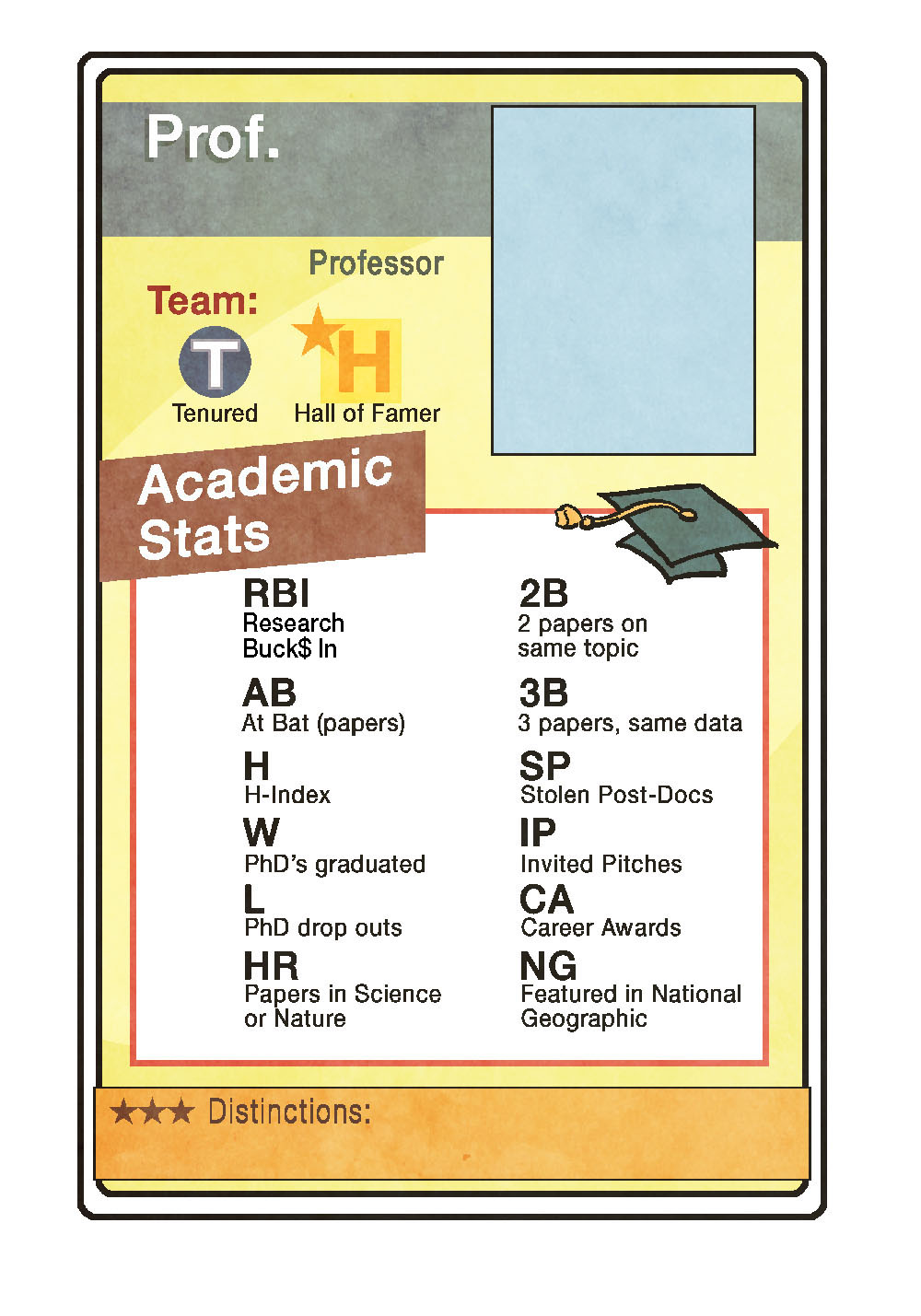
PhD Comics: Professional Trading Cards

There's even a template where you can make a trading card for your own professor. :)

I may not be in academia but I spent sixteen years of my life in it, so I appreciate things like this.

Thanks to PF Anderson (tweeting as @pfanderson) for the link.

Someone needs to come up with trading cards for such librarian luminaries as Melvil Dewey, Will Manley, and Nancy Pearl. :)

Wednesday, December 22, 2010

Cool graphs of verbal vs. mathematical aptitude in various academic majors

Verbal vs. mathematical aptitude in academics

Worst verbal? Accounting and social work majors
Worst math/quantitative? Social work majors
Worst reading? Social work majors

Doesn't sound great for that profession. Philosophy majors do well in all three categories.

I was a history and sociology major with the honours programme (which was essentially a 'Great Books' curriculum that was in addition to other classes--I added a classical civilisation with a Judaic studies minor after I actually received my BA. Sadly, I was one class short of a linguistics major. (Damn phonological analysis, which was never taught when I could take it.) So I was an social sciences/humanities geek. When I took the GRE my intended major was history.)) Like the analysis for history, my quantitative was about average (somewhere in the upper 500s--that was 21 years ago and I have no idea where my original scores are) and my verbal high (somewhere in the upper 600s or lower 700s, I think). What I sucked majorly in was the special subject test for history of all things, because it had a lot of art history. I have since rectified that deficit. I wonder how'd I do these days? I think my brain is turning somewhat to mush. I need to exercise it more.

Thursday, October 21, 2010

This can be so true...

Here's a great comic from Zack Weiner. (And yes, I saw it on JMG. I really will find something original to post tonight.

But, darn it, it's too funny to ignore.